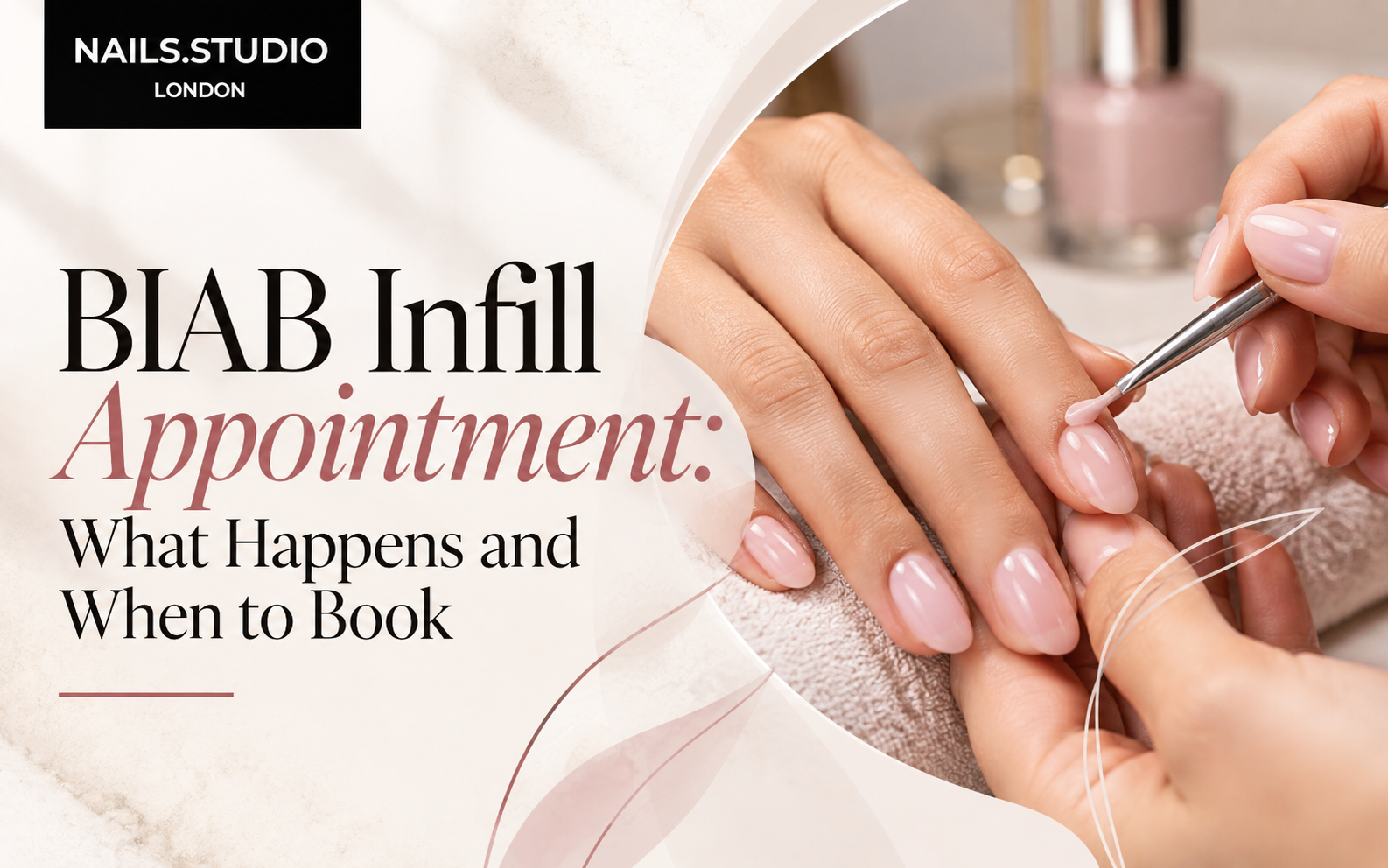
A few weeks after a fresh manicure, a gap starts to show between your cuticle and the product. The shape feels slightly different, the shine fades and your set no longer looks as neat as it did on day one. A BIAB infill appointment is how you bring it back to its best.
Knowing what happens in the chair, and when to book, takes the guesswork out of nail care. This guide walks you through the full process so you can arrive prepared and make confident decisions about your next visit.
BIAB infills, sometimes called a BIAB nail refill, are a maintenance treatment for an existing Builder in a Bottle manicure. Instead of removing everything, your technician assesses the current set, prepares the nail and rebuilds the area where your natural nail has grown.
It is not simply a fresh layer of gel over the old product. Careful preparation keeps the structure balanced and comfortable, and the work involved depends on your nail condition, how much your nails have grown and the state of the existing product.
Most people book every three to four weeks, although the right timing depends on how quickly your nails grow, how hard you work them and the length of your set. Your technician can suggest an interval that suits you. These are the signs that it is time to book:
Leaving it much longer than four weeks can make the gap significant and affect the balance of your extensions. If you notice heavy lifting, pain or redness, contact your technician promptly rather than covering the area with more product.
Techniques vary between salons and nail types, but the BIAB infill process generally follows five stages.
Often, yes. An infill is a good moment to move from a nude to a deeper shade, try French tips or adjust the shape to suit your current length. How much can change depends on your nails and the amount of reshaping required, and a major shift in length or style may call for a fresh set.
If you are undecided, our guide to BIAB nail extension shapes explains how almond, square, oval and coffin finishes compare. Mention what you have in mind when you book so your technician can plan the time.
An infill suits a set that is in good condition and securely attached. Removal and a fresh application is the better choice when there is extensive lifting, damage, an unbalanced structure or a wish for a significant change.
The decision should rest on the health of your nails, not on convenience. Adding product over damaged or poorly bonded material hides a problem rather than solving it, so trust your technician’s assessment.
A little preparation helps your visit run smoothly:
Between visits, good BIAB nail maintenance is simple. Apply cuticle oil daily, wear gloves for cleaning and keep to the schedule your technician recommends. Regular care helps your next BIAB infill appointment stay quick and straightforward.
At Nails Studio London, your technician will assess your current set and explain whether an infill or a fresh application is right for your nails. Your nail condition, existing product and preferred finish guide every decision.
If you are looking for a BIAB infill appointment in London, read about our BIAB nail extensions in London to see what we offer, or book online when you are ready. New to BIAB? Our guide on what to know before getting BIAB nails is a helpful place to start.
It is usually shorter than a full set, though it depends on the amount of growth and whether you want a new design. Your technician can give you an estimate when you book.
You can, but a larger gap makes the rebalancing more involved and may mean a fresh set is needed instead.
It should not when it is done carefully. Problems tend to come from rushed preparation or from picking at product at home.